The Austin Climate and Your Doors: Why Sticking Happens Here
If you live in Austin, you've probably noticed that doors don't always slide smoothly year-round. This isn't a coincidence. The Central Texas climate creates unique conditions that directly affect how wooden door frames behave. Our hot, humid summers followed by dry winters cause wood to expand and contract repeatedly, and this seasonal movement is one of the primary culprits behind doors that won't close properly.
Austin's humidity levels can swing dramatically throughout the year. During summer months, moisture in the air causes wood to swell. When winter arrives and heating systems dry out homes, that same wood shrinks. Over time, this constant expansion and contraction weakens the structural integrity of door frames, causing them to warp or shift slightly out of square. The result: a door that sticks, binds, or refuses to latch smoothly. For many homeowners, this seems like a minor inconvenience, but it's often the first warning sign of a more serious underlying problem.
Termite Damaged Door Frame: A Silent Structural Threat
One of the most serious reasons doors stick in Austin homes is termite damage. Subterranean termites thrive in the warm, moist environment of Central Texas, and they're attracted to the wood components that frame your doors. When termites tunnel through door frames, they hollow out the wood from the inside, compromising its strength and causing the frame to shift or settle unevenly. This uneven settling is what makes the door stick or bind against the frame.
A Termite Damage Repair expert can identify whether your sticking door is actually caused by termite activity. Signs include visible mud tubes on walls, small holes in wood, or a hollow sound when you tap on the door frame. If termites have been at work, the problem goes far beyond a sticky door. The structural damage can spread to other parts of your home, including floor joists, wall studs, and even the foundation. This is why it's critical to address a sticking door promptly rather than dismissing it as a cosmetic issue. Early detection and professional repair can save you thousands in damage.
Wood Rot and Dry Rot: When Moisture Becomes the Enemy
Beyond termites, wood rot and dry rot are common causes of sticking doors in Austin homes. Wood rot develops when wood absorbs moisture over extended periods, creating an environment where fungi can thrive. Dry rot, despite its name, also requires some moisture to develop and spreads quickly through wood, weakening it significantly. Both conditions can affect door frames, especially if the door is located near a bathroom, kitchen, or exterior wall where moisture exposure is higher.
If your door frame has been compromised by Wood Rot & Dry Rot Repair, you may notice that the wood feels soft or spongy to the touch, or you might see discoloration and crumbling wood around the frame. These are signs that the structural material supporting your door has begun to deteriorate. When the frame weakens, it can't hold the door in perfect alignment, causing binding and sticking. The door itself might also warp as the frame shifts. Professional inspection is essential because wood rot and dry rot can spread to adjacent framing members if left untreated, potentially affecting the structural integrity of your entire wall.
House Settling: A Natural Process That Affects Your Doors
Austin homes, like all structures, settle over time. This is a completely natural process, but it can definitely cause doors to stick. When a house settles unevenly, the wooden frames that surround doors can shift slightly out of plumb (vertical alignment) or out of square (right angles). Even a quarter-inch of movement in a door frame is enough to cause a door to bind or stick, especially if the frame was already tight to begin with.
House settling becomes more noticeable in older Austin homes, but it can happen in newer construction too. Factors that accelerate settling include poor soil conditions, inadequate foundation support, or moisture changes in the soil beneath your home. If you notice that multiple doors throughout your house are sticking, or if you see cracks developing in drywall or plaster, these are signs that your home may be settling unevenly. In some cases, settling is minor and cosmetic, but in others, it can indicate a foundation issue that requires professional assessment. If you suspect settling is the cause of your sticking doors, contact Austin Carpentry at (737) 387-5120 for a professional evaluation.
How to Diagnose Why Your Door Won't Close Properly
Before you can fix a sticking door, you need to understand what's causing it. Start with a visual inspection. Look at the door frame closely. Is the wood discolored, soft, or crumbling? These are signs of rot. Do you see small holes, mud tubes, or damaged wood that looks hollowed out? These indicate termites. Is the frame visibly warped or out of square? That could be settling, humidity-related swelling, or structural movement.
Next, test the door's operation. Does it stick at the top, bottom, or along the entire edge? If it sticks at the top, the frame may have settled or warped upward. If it sticks at the bottom, the frame might be sagging. Does the door stick only during humid summer months and operate smoothly in winter? That's a classic sign of humidity-induced wood swelling. If the sticking is consistent year-round and accompanied by other warning signs, structural damage from termites or rot is more likely. For a thorough diagnosis, a professional carpenter can assess the frame, check for moisture, look for pest damage, and evaluate the home's foundation and framing. This comprehensive approach ensures you address the real cause, not just the symptom.
When to Call a Professional: Door Repair and Replacement Options
Minor sticking caused purely by seasonal humidity might be solved with simple adjustments like sanding the door edge or adjusting hinges. However, if your door sticks because of termite damage, wood rot, or house settling, you need professional help. Attempting to fix these issues yourself can be dangerous and may allow the underlying problem to worsen. A qualified carpenter can determine whether the frame can be repaired or if it needs to be replaced entirely.
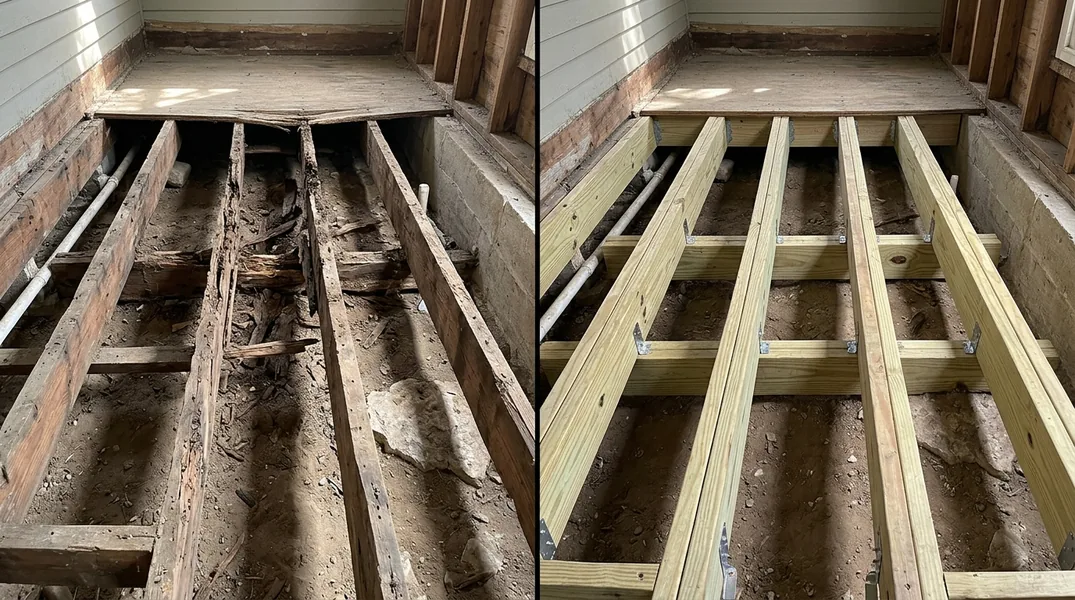
Austin Carpentry specializes in identifying and repairing the root causes of sticking doors. Whether the problem stems from termite damage, wood rot, or structural settling, our team can assess the situation and recommend the best solution. In some cases, the frame can be straightened or shimmed back into alignment. In others, the damaged section of the frame must be replaced. If the damage is extensive or affects load-bearing components, we may need to coordinate with structural specialists or address related issues like Floor Joist & Subfloor Repair if the damage has spread. Don't let a sticking door become a bigger problem. Call us at (737) 387-5120 or visit our website to request a free estimate and get your door operating smoothly again.
Looking for a professional carpentry contractor in Austin? Austin Carpentry responds fast for all your carpentry needs.
Get a Free QuoteOur services: Wood Rot & Dry Rot Repair · Termite Damage Repair · Floor Joist & Subfloor Repair