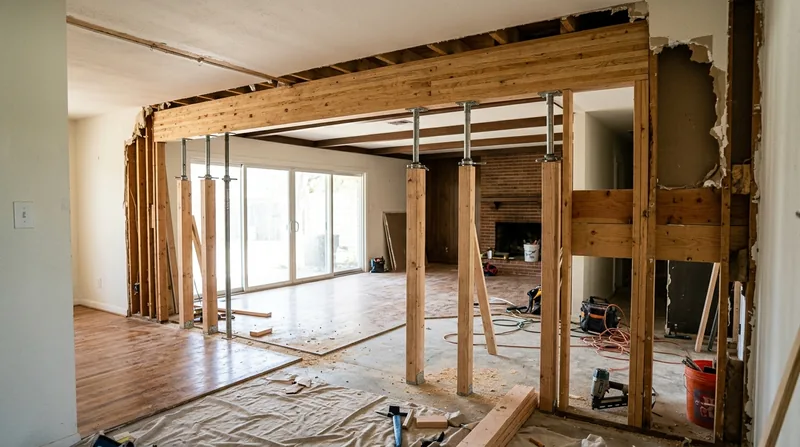




Beam Replacement & Load-Bearing Wall Removal in Austin is structural carpentry work that demands precision, engineering alignment, and respect for the building codes that keep homes safe. Austin's residential landscape spans everything from 1920s craftsman bungalows in Hyde Park to mid-century modern homes in Allandale, limestone and stone-veneer cottages across the Hill Country neighborhoods, and newer subdivisions ringing the suburbs. Many of these homes were built with load-bearing walls that now stand in the way of open-concept living, or with headers and beams that have sagged under decades of weight and moisture. We remove and replace those beams, install engineered headers, and open up floor plans the right way, always working to the specifications of a structural engineer and the City of Austin building permit requirements. The difference between a successful conversion and a structural failure comes down to understanding what the wall or beam actually carries, sizing the replacement correctly, and installing it to code.
Why Beam Replacement & Load-Bearing Wall Removal Matters in Austin Homes
Austin's residential stock reflects generations of construction practices, materials, and design assumptions. Older homes often have undersized headers, single-ply beams, or load-bearing walls positioned exactly where homeowners want light, flow, and open living space. Sagging beams are common in homes where moisture has weakened wood over time, or where the original sizing was marginal to begin with. Removing a load-bearing wall without proper support is dangerous and illegal; doing it right requires engineering, structural planning, and a permit. The cost and complexity are real, but so is the payoff: a safe, code-compliant home with the layout you actually want.
- Load-bearing walls carry roof and floor loads and cannot be removed without a structural replacement beam installed to engineer specifications.
- Sagging beams indicate wood fatigue, moisture damage, or undersizing and must be replaced or reinforced to restore structural integrity.
- Engineered beams, steel I-beams, and built-up headers are sized by a structural engineer based on the span, load, and support conditions.
- The City of Austin requires a building permit for any structural alteration, including beam replacement and load-bearing wall removal.
- Proper support during construction, temporary bracing, and staged removal prevent floor collapse and protect the home and occupants.
Getting this work right protects your home's structural integrity and ensures you can safely enjoy the open layout you want.
Key info: Homeowners in Travis Heights, Clarksville, and West Lake Hills often discover sagging headers when they open up kitchens or remove walls between living spaces. The limestone bedrock and hot, humid subtropical climate of Austin accelerate wood decay and moisture-driven settlement. A structural engineer's assessment and a City of Austin permit are non-negotiable for any load-bearing wall removal or beam replacement work.
For more context on structural carpentry and how wood fails over time, see our Framing & Structural Carpentry service page.
How We Handle Beam Replacement & Load-Bearing Wall Removal in Austin
Our process starts with understanding what the wall or beam actually supports, then bringing in a structural engineer to size the replacement. We coordinate with the City of Austin for the permit, set up temporary bracing to carry the load safely during removal, install the new beam or header to spec, and finish the work cleanly. Every step is documented and inspected. We work in tight spaces, historic homes, and modern subdivisions across Austin, Cedar Park, Round Rock, and the surrounding areas. The goal is a structurally sound result that looks right and performs for decades.
- We meet with you to understand the layout change you want and assess the existing structure.
- We coordinate with a structural engineer to determine beam size, material, and support requirements.
- We obtain a City of Austin building permit, including engineer drawings and load calculations.
- We install temporary bracing to safely carry the load during the removal phase.
- We carefully remove the load-bearing wall, post, or undersized beam, piece by piece.
- We install the new engineered beam, header, or built-up assembly to exact specifications.
- We remove temporary bracing only after the new structure has been inspected and approved by the city.
- We finish the area with drywall, trim, or flooring to blend the repair into the home.
This disciplined approach ensures the work is safe, legal, and invisible once complete.
Local example: A 1950s ranch home in Allandale wanted to open the kitchen to the living room by removing a load-bearing wall. We worked with a structural engineer to size a 16-inch engineered beam, obtained the permit from the City of Austin, installed temporary posts to carry the load, removed the wall, and installed the beam with new posts and footings. The kitchen is now open, the home is stronger, and the city inspector signed off on the final inspection.
Related work often includes floor joist and subfloor repair when moisture damage is found during the removal. Learn more on our Floor Joist & Subfloor Repair page.
Beam Replacement & Load-Bearing Wall Removal Methods
| Approach | Description | Best for |
|---|---|---|
| Engineered Steel I-Beam | A rolled-steel beam sized by structural engineer, installed on new posts and footings, capable of carrying heavy loads across long spans with minimal deflection. | Long spans, heavy loads, minimal settlement, and modern open-concept conversions where deflection must be kept to a minimum. |
| Engineered Lumber Beam | A laminated veneer lumber (LVL) or engineered beam product, lighter than steel, easier to handle, and sufficiently strong for many residential applications when properly sized. | Moderate spans, lighter loads, easier handling in tight spaces, and budget-conscious projects where steel is not required. |
| Built-Up Header | Multiple layers of dimensional lumber or engineered lumber bolted together to create a custom beam, installed on posts and footings, and finished to match the home's interior. | Short to medium spans, aesthetic integration with wood framing, and homes where a steel beam appearance is not desired. |
| Beam Reinforcement (Sistering) | Installing a new beam alongside an existing sagging beam, bolting them together to share the load, and lifting the sagging beam back toward level over time. | Sagging beams that are structurally sound but undersized, homes where a full removal is impractical, and staged lifting to minimize disturbance. |
Beam Replacement & Load-Bearing Wall Removal Cost in Austin: What to Expect
Beam replacement and load-bearing wall removal typically start at $3,500 to $5,000 for straightforward jobs in accessible locations, and scale upward based on span, material, engineering complexity, and the scope of structural work required. A single-story ranch home with a 12-foot span and engineered lumber may fall in the lower range. A two-story home with a 20-foot span requiring steel, new footings, and extensive temporary bracing will cost significantly more. Engineering fees, permit costs, and any wood repair work uncovered during removal add to the total. Getting two or three detailed estimates from local carpenters who understand Austin's building code and soil conditions is the best way to understand your actual cost.
Factors that move the price:
- Span length: longer spans require larger, more expensive beams and more substantial support posts.
- Load above: two-story homes and roofs over the beam increase the required beam size and cost.
- Material choice: engineered lumber costs less than steel, but steel spans farther with less deflection.
- Existing damage: wood rot, termite damage, or moisture problems discovered during removal add repair costs.
- Access and complexity: tight spaces, finished ceilings, and plumbing or electrical in the wall increase labor and time.
- Footings and posts: new posts may require concrete footings, especially in crawl spaces or on the ground floor.
- Temporary bracing: safe removal requires temporary posts and bracing, the cost of which depends on the load and duration.
- Finishing: drywall, trim, and flooring to close up the space after the beam is installed.
For a detailed breakdown of what beam replacement and wall removal typically costs in your situation, see our full pricing overview or call us at (737) 387-5120 for a free estimate.
Beam Replacement & Load-Bearing Wall Removal Near Me: What Austin Homeowners Should Know When Hiring a Carpenter
Choosing the right contractor for structural work is critical. This is not a job for a handyman or a franchise crew that rotates workers. You want the same carpenter or small team from start to finish, someone who understands Austin's climate, the homes in your neighborhood, and the City of Austin's building code. Verify that your contractor is fully insured and can show proof of coverage. Ask for references from recent jobs in your area, and call them. Check whether the contractor has experience coordinating with structural engineers and obtaining permits from the City of Austin. Understand the timeline: a typical beam replacement takes two to four weeks from permit approval to final inspection, depending on scope. Ask about temporary bracing safety, how the work will affect your daily life, and what happens if damage is discovered during the removal.
- Verify full insurance coverage and ask for a certificate of insurance before work begins.
- Request references from at least two recent projects in Austin or nearby areas and contact them directly.
- Confirm that the contractor has obtained a City of Austin building permit and understands the permit inspection schedule.
- Ask how the contractor will handle temporary bracing, site safety, and protection of your home during the removal phase.
- Get a detailed written estimate that itemizes beam material, labor, engineering coordination, permits, and finishing work.
- Clarify the timeline: when the permit will be obtained, when work will start, and when the final city inspection will occur.
- Understand what happens if the contractor discovers wood rot, termite damage, or other structural problems during removal.
- Ask whether the contractor can help you document damage for an insurance claim if applicable.
A reputable local carpenter will answer these questions clearly and stand behind the work with a warranty.
For more information or to request a free estimate, contact Austin Carpentry at (737) 387-5120. We serve Austin, Round Rock, Cedar Park, Pflugerville, Leander, and the surrounding areas, and we are fully insured and EPA Lead-Safe Certified.
Beam Replacement & Load-Bearing Wall Removal in Austin: Pricing Guide
| Service | Price | Details |
|---|---|---|
| Single-story beam replacement, engineered lumber, up to 14-foot span | Starting at $3,500 | Includes engineered beam material, labor, temporary bracing, one new post, finishing, and city permit coordination |
| Two-story beam replacement, steel I-beam, 16 to 20-foot span | Starting at $6,500 | Includes steel beam, multiple new posts with concrete footings, engineering, permit, temporary bracing, and drywall finishing |
| Load-bearing wall removal with floor joist or subfloor repair | Starting at $5,000 | Includes beam installation, wall removal, damaged wood repair or replacement, footings, and structural finishing to code |
| Beam reinforcement (sistering) for sagging beams | Starting at $2,500 | Includes new reinforcement beam, bolting, gradual lifting, temporary bracing, and minimal disruption to the home |
| Complex structural work, engineering-heavy, or multiple structural alterations | On estimate | Requires on-site assessment, structural engineer coordination, and detailed scope definition before a price can be quoted |
| Free estimate and site visit | No charge | Response within 24 hours, no obligation to book, full assessment and written quote provided by phone or email |
Indicative pricing, the exact cost depends on square footage, finish, and site access. Free personalized estimate within 24h at (737) 387-5120.


