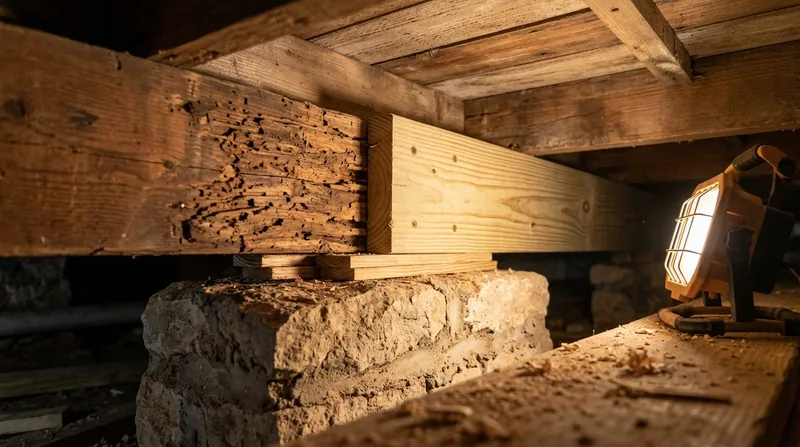




Sagging floors and soft spots in Austin's older homes are a serious signal, and they often trace back to floor joist and subfloor repair needs. Central Texas's flash-flood-prone creeks, relentless termite pressure, and the weight of decades on Victorian cottages in Hyde Park and Craftsman bungalows in Travis Heights create real structural strain on ground-level framing. When moisture works into joists or termites compromise wood fibers, the subfloor loses its grip, and the floor above it begins to move. We repair and replace compromised joists, rebuild subfloor sections, and level floors before finishes go back down, stopping the damage and restoring solid footing to your home.
Why Floor Joist and Subfloor Damage Matters in Austin's Older Homes
Austin's residential stock spans from shotgun cottages in East Austin to limestone and native-stone homes in the Hill Country's western neighborhoods. Many of these homes sit close to grade, with rim joists and sill plates exposed to moisture from flash floods, foundation seepage, and the creek-cut ravines that define the terrain. Termites run active year-round in Central Texas, and they consume wood from the inside out, leaving joists hollow and subfloor sections soft before visible damage appears. A sagging floor is not just cosmetic: it signals that the structural frame is losing capacity, and the longer it goes unaddressed, the more wood requires replacement instead of repair.
- Termite-damaged joists lose load-bearing capacity and must be sistered or replaced to restore floor rigidity.
- Moisture-rotted subfloor sections create soft spots that concentrate stress on remaining joists and accelerate failure.
- Sagging floors can affect door and window operation, crack drywall, and signal deeper structural compromise.
- Addressing damage early keeps repair costs down and preserves more of the original wood frame.
Early intervention stops the decay and keeps your repair bill realistic. For guidance on what your local building department requires for structural repair, contact the City of Austin Development Services to confirm permit thresholds for joist and subfloor work in your neighborhood.
Key info: Many Austin homes in Clarksville, West Lake Hills, and Dripping Springs sit on limestone bedrock with natural drainage challenges. Spring rains and creek overflow can push moisture under rim joists for weeks, creating ideal conditions for dry rot and termite activity.
How We Repair Floor Joists and Subfloor in Austin
Our process starts with a clear assessment of which joists are sound and which need repair or replacement. We expose the damage, measure the extent, and propose sistering (reinforcing with new lumber alongside the compromised joist) where the wood justifies it. For joists that are too far gone, we replace them in kind, using pressure-treated lumber for ground-level framing and Douglas fir or similar species to match the original stock where finish work is involved. Subfloor sections are rebuilt in plywood or tongue-and-groove lumber, leveled before flooring goes back down, and we tie the work into your existing frame without unnecessary disruption to the rest of your home.
- We excavate or remove access panels to expose joists and subfloor, documenting damage before work begins.
- Sound joists are reinforced with sisters (new lumber bolted alongside the compromised member) to restore capacity.
- Damaged joists are cut out and replaced with pressure-treated or kiln-dried lumber sized to match the original.
- Subfloor is rebuilt in sections, leveled with shims and fasteners, and tied to the joist frame with ring-shank nails or screws.
- Rim joists and sill plates are inspected and replaced where moisture or termite damage is present.
The entire process protects your flooring investment and stops the structural decay that spreads to adjacent joists and beams. For more on how we handle related wood damage, visit our wood rot and dry rot repair page.
Real example: A 1920s Craftsman bungalow in Hyde Park had soft spots in the master bedroom floor and visible termite damage on the rim joist. We sistered three joists, replaced a 12-foot section of compromised subfloor, and reinforced the sill plate with new lumber. The floor was level again, and the homeowner avoided a full joist replacement that would have cost twice as much.
Floor Joist and Subfloor Repair Methods
| Approach | Description | Best For |
|---|---|---|
| Sistering | A new joist is bolted alongside the compromised member, doubling load capacity and restoring rigidity without full replacement. | Joists with localized damage or partial termite loss where the wood structure is still mostly sound. |
| Full Joist Replacement | The damaged joist is cut out and a new member of matching size and species is set in place, fastened to rim and beam. | Joists that are hollow, severely rotted, or so weakened that sistering alone cannot restore adequate capacity. |
| Subfloor Patching | Soft or rotted subfloor sections are cut out and replaced with new plywood or tongue-and-groove lumber, nailed or screwed to the joist frame. | Localized subfloor damage (soft spots, rot, or water stains) where joists underneath are still sound. |
| Rim Joist and Sill Plate Repair | The rim joist (the band of lumber around the perimeter of the floor frame) and sill plate (the base where joists meet the foundation) are inspected, repaired, or replaced to stop moisture entry. | Moisture-damaged rim joists, termite-compromised sill plates, and any structural joint that shows signs of decay or pest activity. |
Floor Joist and Subfloor Repair Cost in Austin: What to Expect
Floor joist and subfloor repair in Austin typically starts at around $1,800 for straightforward repairs like sistering a joist or patching a small subfloor section. The cost moves up based on how many joists need work, how much subfloor must be replaced, and whether the rim joist or sill plate requires attention. Access matters too: if we need to excavate soil, remove flooring, or work around plumbing and HVAC runs, labor increases. Moisture damage and termite loss in multiple joists or a large subfloor area can push jobs into the $4,000 to $8,000 range or higher.
The best way to know your actual cost is to get a free estimate from our crew. We come out, expose the damage, measure the scope, and give you a firm number before we touch a nail. Every floor is different, and the price reflects what your home actually needs. Visit our pricing overview for more detail on how we structure estimates, and call us at (737) 387-5120 to schedule.
Floor Joist and Subfloor Repair Near Me: What Austin Homeowners Should Know When Hiring a Carpenter
Finding the right carpenter for floor joist and subfloor work means looking for someone who understands structural carpentry, not just finish work. Ask whether the contractor has experience with sistering joists, replacing subfloor, and working with pressure-treated lumber in ground-level framing. Check references from previous jobs in your neighborhood, especially if you live in a historic district like Hyde Park or Clarksville where permit requirements and architectural standards may be stricter. Make sure the contractor is fully insured and can provide proof of coverage; structural work carries real liability, and you want protection if something goes wrong during the job.
- Ask for references from similar projects and call them to confirm the work was done on time and to the homeowner's satisfaction.
- Request a detailed written estimate that breaks down labor, materials, and any permit costs before you commit.
- Confirm that the contractor understands local permit requirements; contact the City of Austin Development Services if you are unsure whether your project needs approval.
- Get at least two or three estimates so you can compare scope, approach, and price without pressure.
- If your home is in a historic district or HOA community, verify that the repair plan meets architectural or community guidelines before work starts.
Choosing a local carpenter who has worked in Austin for years means you get someone who knows the soil, the termite pressure, the flash-flood risks, and the mix of home ages that define our market. Ready to move forward? Contact us for a free estimate and we'll assess your floor and give you a clear plan to fix it.
Floor Joist & Subfloor Repair in Austin: Pricing Guide
| Service | Price | Details |
|---|---|---|
| Sistering a single joist | Starting at $1,800 | Reinforcing one compromised joist with a new sister member, including labor, fasteners, and access work |
| Subfloor patching and leveling | Starting at $2,200 | Removing and replacing soft or rotted subfloor sections, leveling with shims, and fastening to joists |
| Multiple joists or full subfloor replacement | On estimate | Complex jobs involving more than two joists or large subfloor areas require site inspection to determine scope and price |
| Rim joist or sill plate repair | Starting at $2,500 | Reinforcing or replacing moisture-damaged rim joists and sill plates to stop water entry and restore structural integrity |
| Free estimate | No obligation | Same-day or next-day response to your call at (737) 387-5120 with no charge for assessment or written quote |
Indicative pricing, the exact cost depends on square footage, finish, and site access. Free personalized estimate within 24h at (737) 387-5120.


