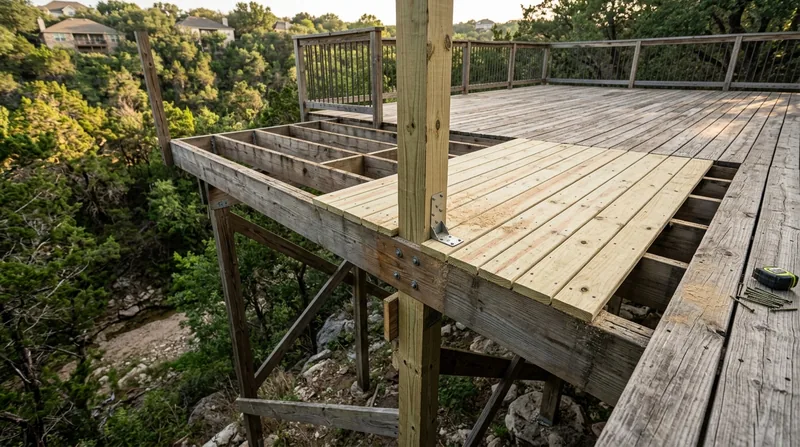




Austin's deck and porch spaces take a real beating from Central Texas humidity, termite pressure that runs most of the year, and the flash-flood risk that comes with creeks cutting through neighborhoods like Zilker, Barton Hills, and East Austin. When water pools under a deck or a porch sits near drainage areas that can rise fast after a storm, the structural framing and decking boards start to fail within months. Deck and porch repair in Austin is not cosmetic work, it's structural maintenance that keeps outdoor spaces safe and solid. We replace rotted or termite-damaged boards, posts, and railings; repair stairs and framing; and get honest about when a board can be saved and when replacement is the only answer. Our approach is repair-first, backed by field experience and a clear explanation of what you're looking at.
Why Deck and Porch Repair Matters in Austin's Humid Climate
Austin sits at the edge of the Hill Country where limestone bedrock, cedar-covered terrain, and creek-cut ravines define the landscape. The humidity that comes with that geography is relentless on wood exposed to weather. Decks and porches in neighborhoods like Travis Heights, Clarksville, and the historic Hyde Park bungalows absorb moisture year-round, and termites stay active through most seasons. The combination of standing water, high humidity, and termite activity turns sound wood into soft, punky material in a single season. A post that looks solid from above may be hollow at the base. A rim joist supporting the deck may have lost 40 percent of its thickness to dry rot. Left unaddressed, these conditions spread fast and make repairs more expensive.
- Termite damage creates hollow galleries in posts and structural members that weaken the load-bearing capacity of the entire deck frame.
- Wood rot accelerates in areas where water pools or where the deck sits close to ground level and drainage patterns, typical in flood-prone neighborhoods near Lady Bird Lake.
- Rotted decking boards become slippery and unsafe, and replacing a few boards now stops the damage from spreading to the framing underneath.
- Porch posts and railings exposed to weather need inspection every two to three years in Austin's climate to catch damage before it becomes structural.
- Sagging or bouncy decks indicate that floor joists or the rim joist have lost strength and require immediate evaluation to prevent injury.
Catching these problems early is the difference between a focused repair and a full rebuild. Our job is to tell you which boards can stay and which need to come out.
Key info: In neighborhoods like Zilker and near Lady Bird Lake, decks built close to drainage areas or on slopes face accelerated water damage. A porch in Dripping Springs or Bee Cave on a limestone slope may shed water better than one in East Austin on flat terrain, but both face termite pressure from April through November. Inspection every two years catches rot before it reaches the frame.
For more on wood damage from moisture and pests, see our wood rot and dry rot repair page or our termite damage repair service.
How We Handle Deck and Porch Repair: A Repair-First Approach
Our process starts with a close inspection of every board, post, and connection point. We probe soft wood with a sharp tool to measure the depth of rot. We look for termite galleries, check the rim joist and band board where water collects, and test the structural integrity of the frame. If a board is soft only on the surface or has lost less than 15 percent of its thickness to rot, we often can save it with targeted repair. If the damage runs deep or affects a load-bearing member, replacement is the honest answer. We explain what we find and why we recommend what we do.
- We begin with a detailed walkthrough and probe test to map the extent of rot or termite damage across the deck or porch structure.
- We remove damaged boards and framing members carefully, labeling and salvaging any hardware or fasteners that can be reused.
- We replace rotted wood with pressure-treated lumber or redwood, sized to match the original and secured with stainless steel fasteners that won't rust in Austin's humidity.
- We repair or replace floor joists, rim joists, and posts that show structural damage, using sistering techniques where the wood is sound enough to support the reinforcement.
- We install flashing, drip edges, and proper spacing between boards to shed water and slow future rot, addressing the moisture problem that started the damage.
- We test the repair for strength and safety, and walk you through maintenance steps to extend the life of the deck.
Each repair is tailored to the damage we find and the structure we're working on. There is no one-size-fits-all fix.
Example: A craftsman bungalow in Hyde Park had a front porch with a rotted rim joist where water from the roof gutter drained directly onto the board. We replaced the rim joist, installed a proper drip edge on the gutter, and spaced the decking to allow airflow. The posts were solid, so we left them and focused the repair on the water problem. Total time, two days. Cost was $2,400, well below the cost of rebuilding the entire porch.
| Repair Method | What We Do | Best For |
|---|---|---|
| Board Replacement | Remove damaged decking or fascia boards and install new pressure-treated or redwood lumber, sized and finished to match the original. | Surface rot, cosmetic damage, or boards that have lost structural integrity but the framing below is sound. |
| Joist and Rim Joist Repair | Replace or sister damaged floor joists and rim joists with new framing, secured with lag bolts and stainless steel hardware. | Structural damage to the deck frame, sagging decks, or rotted rim joists that support the deck perimeter. |
| Post and Railing Repair | Replace rotted or termite-damaged posts and railing members with new pressure-treated lumber, maintaining code-compliant spacing and strength. | Posts that are soft or hollow, railings that are loose or cracked, or structural damage from termites or water damage. |
| Stair and Step Repair | Replace rotted stringers, treads, and risers; repair or rebuild stairs to code with proper rise and run, securing all fasteners. | Sagging or soft stairs, loose treads, rotted stringers, or safety hazards from water damage or age. |
| Flashing and Drainage | Install or repair flashing around posts, at the ledger board, and under railings; improve spacing and grading to shed water and prevent pooling. | Chronic moisture problems, water pooling under decks, or decks built too close to the ground in flood-prone areas. |
Each method is chosen based on what the inspection reveals and what will last longest in Austin's climate.
Deck and Porch Repair Cost in Austin: What to Expect
A straightforward repair, like replacing a few rotted decking boards or a single post, typically starts around $900 to $1,400 and covers labor, materials, and fasteners. If the damage is more extensive, such as a rotted rim joist or multiple structural members, you can expect $1,500 to $3,500 depending on the scope and access. A full porch or deck structural repair involving joists, posts, and railings can run $3,500 to $7,000 or more, depending on the size of the structure and the extent of rot or termite damage. The cost is driven by the amount of wood that needs to come out, the difficulty of access, whether the deck sits near water or on a slope, and whether the repair requires a permit.
Several factors move the estimate up or down. A deck in a tight corner of a yard or near a creek bed may require temporary bracing or careful sequencing, adding labor. Termite damage that has spread through multiple members costs more to address than a localized rot pocket. A deck built on a slope in Dripping Springs or Bee Cave may need extra bracing or flashing work. Decks in historic districts like Hyde Park or Travis Heights may require matching materials or finishes that cost more than standard pressure-treated lumber.
The best approach is to get two or three estimates from contractors who will spend time probing the wood and explaining what they find. A low estimate that doesn't account for hidden damage will cost you far more when the real scope emerges mid-job. Our estimates are free and come with a detailed explanation of what we found and why we recommend what we do. See our pricing page for more detail on what drives cost, or call us at (737) 387-5120 for a no-obligation inspection.
Deck and Porch Repair Near Me: What Austin Homeowners Should Know When Hiring a Contractor
Finding the right carpenter for deck and porch repair means understanding a few key points before you sign a contract. First, verify that any contractor you hire is fully insured and can provide proof of coverage. Ask for references from recent deck or porch work, and call at least two to ask about the quality of the repair and whether the contractor explained the damage clearly. If your deck or porch is in a historic district like Hyde Park, Clarksville, or Travis Heights, check whether your HOA or the city has any requirements for materials or finishes. Some neighborhoods require cedar or redwood rather than pressure-treated lumber, and that will affect both cost and timeline.
Permits are commonly required for structural repairs such as replacing joists, removing or altering posts, or rebuilding stairs. The threshold and requirements vary by neighborhood and by whether the work affects the deck's footprint or load-bearing capacity. Before you hire, ask your contractor whether a permit is needed and confirm the requirement with the City of Austin's building department. A contractor who is unsure about permits or tries to skip them is a red flag. Structural work done without a permit can cause problems when you sell the house or file an insurance claim.
Get at least two or three estimates in writing, with a clear breakdown of what's being replaced and why. Avoid contractors who quote a price over the phone without seeing the deck. A thorough estimate will include labor, materials, disposal of old wood, and a timeline. Ask whether the estimate includes flashing, fasteners, and any drainage improvements to address the moisture problem that caused the damage. Finally, understand the warranty. We stand behind our work for one year against defects in labor and materials, but weathering and future rot are not our responsibility. The best protection is regular maintenance and inspection every two years.
Ready to get started? Contact us for a free estimate and a detailed inspection of your deck or porch. We'll explain what we find and give you an honest recommendation on repair or replacement.
Deck & Porch Repair in Austin: Pricing Guide
| Service | Price | Details |
|---|---|---|
| Decking Board Replacement | Starting at $900 | Remove and replace rotted surface boards with pressure-treated lumber and stainless fasteners, including labor and materials |
| Post or Railing Repair | Starting at $1,200 | Replace a single rotted post or railing section; cost increases with structural complexity and access difficulty on the site |
| Rim Joist or Structural Repair | Starting at $1,800 | Replace or sister damaged rim joists, floor joists, or structural members; cost depends on extent of rot and whether sistering or full replacement is needed |
| Full Porch or Deck Structural Repair | On estimate | Large-scale repairs involving multiple joists, posts, stairs, or extensive termite damage require on-site inspection to determine scope and accurate pricing |
| Travel and Estimate | Free | No charge for estimates or travel within Austin and surrounding service areas; response within 24 hours at (737) 387-5120 |
Indicative pricing, the exact cost depends on square footage, finish, and site access. Free personalized estimate within 24h at (737) 387-5120.


