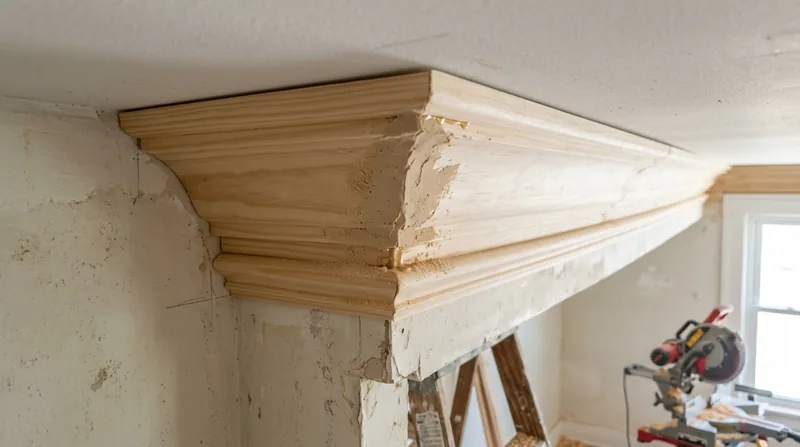




Austin's historic neighborhoods, from the Craftsman bungalows of Hyde Park to the limestone cottages of Tarrytown and Travis Heights, depend on crown molding and baseboard installation to finish a room with the period detail or clean modern lines those homes demand. Central Texas humidity and temperature swings put real stress on trim joints and caulk lines, which is why proper installation, tight coped joints, and the right material selection matter here. Whether you're restoring a 1920s Victorian with period-correct profiles or finishing a mid-century modern home in Allandale with crisp, contemporary baseboard, the craft is the same: precision scripting, clean caulk, and trim that stays put through Austin's hot summers and occasional freeze cycles. We install crown molding, baseboards, chair rail, and window casing to match existing profiles or achieve the look you want, with the attention to detail that Austin's best homes deserve.
Why Crown Molding and Baseboard Installation Matters in Austin's Historic and Modern Homes
Trim work is not decoration alone. In Austin, where homes sit in a hot, humid subtropical climate with real seasonal swings, baseboards and crown molding protect wall edges from scuff and impact, manage moisture at the wall-floor junction, and frame a room with visual weight and proportion. Historic homes in East Austin, Clarksville, and West Lake Hills were built with specific trim profiles that define their character; skipping or rushing this work shows immediately. Modern homes in the outer suburbs benefit from clean, well-coped joints and consistent caulk lines that read as finished and intentional. Poor installation, gaps, or mismatched profiles undercut the whole room.
- Crown molding at the ceiling line visually expands a room and hides the junction where drywall meets framing.
- Baseboards protect walls from furniture, vacuum cleaner damage, and moisture wicking from the floor.
- Coped joints on inside corners stay tight and move with the house as wood and drywall shift seasonally.
- Chair rail and window casing add proportion and period authenticity to older homes across Austin.
- Tight caulk lines and finish-grade paint or stain hide gaps and give the work a custom, built-in appearance.
Proper trim installation is the difference between a room that feels complete and one that feels rushed.
Key info: Austin's humidity and temperature swings mean trim joints can open and close seasonally. Coped joints and quality caulk absorb that movement better than butt joints, which is why we use them on inside corners even in modern homes.
For guidance on trim standards and best practices, the City of Austin Building Services can answer questions about finish standards in permitted remodels.
How We Install Crown Molding and Baseboards: Step by Step
Crown molding and baseboard installation starts with accurate measurement and profile selection. We assess existing trim in your home, match species and finish if you're adding to existing work, or establish the profile and style you want if starting fresh. We then lay out the room, locate studs and blocking, and cut each piece to fit tight against walls and into corners. Inside corners receive coped joints, where the molding profile is traced and cut to fit perfectly against the adjoining piece. Outside corners are mitered, set with construction adhesive and finish nails, and sanded smooth. After installation, we caulk all joints and nail holes, sand the caulk flush, and prepare the trim for paint or stain.
- We measure each wall and the ceiling line to account for out-of-plumb walls and identify the straightest corner to start.
- We select or match the molding profile to your home's style, whether period-correct or modern.
- We locate studs and blocking and drive finish nails into solid wood, never into drywall alone.
- We cut coped joints on inside corners so the trim profile interlocks and stays tight through seasonal movement.
- We apply finish-grade caulk to all joints, sand it smooth, and prepare the trim for your choice of finish.
The result is trim that looks built-in, stays tight, and finishes the room with the detail it deserves.
Local example: A Hyde Park Craftsman bungalow often has 3.5-inch crown molding with a plaster or wood bed mold; we match that profile and cope all inside corners so the trim sits flush and reads as original. A modern home in Pflugerville might call for simple 2.25-inch baseboard with a clean reveal at the floor; we install that with tight butt joints at outside corners and coped inside corners, then caulk and paint for a seamless finish.
Related work on trim and finish carpentry is detailed at our finish carpentry page, which covers window casing, door jambs, and custom trim throughout the home.
Crown Molding and Baseboard Installation Methods: Approach and Material
| Approach | Description | Best for |
|---|---|---|
| Solid wood coping with finish nails | Molding is cut, coped at inside corners, nailed into studs and blocking, caulked, and finished with paint or stain. | Historic homes, high-end finishes, rooms where wood grain or period detail matters. |
| Pre-finished molding with construction adhesive | Factory-finished trim is installed with adhesive and finish nails, coped at corners, then sealed at joints with color-matched caulk. | Homes where paint-grade finish is desired and finish-nailing into solid blocking is possible. |
| MDF or composite baseboards | Engineered material is installed with finish nails and caulk, offering stability in humid climates and consistent finish. | Homes with high humidity, rental properties, or where solid wood is not required for period accuracy. |
| Chair rail and wainscoting installation | Horizontal trim is installed at 30 to 36 inches from the floor, often paired with paneling or beadboard below. | Historic homes, dining rooms, bathrooms, and rooms where period detail or visual interest is a priority. |
Crown Molding and Baseboard Installation Cost in Austin: What to Expect
Crown molding and baseboard installation in Austin typically starts at $450 for a single room, depending on the linear feet, profile complexity, and whether existing trim needs to be removed or matched. A 12-by-14-foot bedroom with new baseboards and crown molding, all coped and caulked, generally falls in the $800 to $1,400 range. A whole-house project across multiple rooms, hallways, and stairwells can run $3,000 to $6,000 or more. The main factors that move the price are linear feet, profile complexity, whether you're matching existing trim, access and layout of the room, and whether drywall repair or stud blocking is needed before installation begins.
- Linear footage is the primary driver: more walls and ceiling line means more cutting, coping, and fastening.
- Profile complexity affects labor time; simple square-edge baseboard takes less time than ornate crown with multiple curves.
- Matching existing trim requires careful profile selection and may involve special ordering or milling.
- Room layout and wall condition matter: out-of-plumb walls, corners that do not square, or soft drywall require extra fitting and repair.
- Removal of old trim, drywall patching, or blocking installation adds to the scope and timeline.
We always recommend getting 2 to 3 estimates from local carpenters so you can compare approach, material choice, and price. Our free estimate is detailed and includes a photo walkthrough so you know exactly what we are quoting.
For a full breakdown of trim pricing across multiple job types, see our pricing page, which covers crown molding, baseboards, chair rail, and other finish carpentry services.
Crown Molding and Baseboard Installation Near Me: What Austin Homeowners Should Know When Hiring a Carpenter
Hiring the right carpenter for trim work means checking that the person or shop has insurance, can show you examples of coped joints and caulk work, and understands the specific demands of your home's style and condition. In Austin, many homes are older and have settled or shifted, which means walls are often out of plumb and corners do not square; a carpenter who rushes the layout or uses only butt joints instead of coping will show gaps that widen over time. Ask for references, look at photos of finished work, and make sure the estimate includes a clear scope of work, material costs, and labor. If your home is in a historic district or has HOA restrictions, confirm that your carpenter is familiar with any design guidelines before work begins.
- Confirm the carpenter is fully insured and carries general liability and workers compensation coverage.
- Ask to see photos or examples of coped joints and caulked trim from previous Austin homes.
- Request 2 to 3 references from homeowners in your neighborhood or similar home type.
- Understand the estimate: material, labor, timeline, and whether old trim removal and drywall repair are included.
- Check whether your home is in a historic district or subject to HOA trim guidelines, and confirm your carpenter understands those rules.
- Discuss finish options, paint or stain color, and whether caulk will be painted or left natural.
A good trim carpenter takes time to measure accurately, explains why coped joints matter in your home, and leaves you with trim that sits tight and looks finished for years to come.
Contact us at (737) 387-5120 for a free estimate. We will walk through your home, discuss your trim goals, and provide a detailed quote within 24 hours. Visit our contact page to request an estimate online.
Crown Molding & Baseboard Installation in Austin: Pricing Guide
| Service | Price | Details |
|---|---|---|
| Single room crown molding and baseboards | Starting at $450 | Includes layout, coping, fastening, caulk, and finish prep for one room, 12 by 14 feet typical |
| Whole-house trim installation | Starting at $2,500 | Multiple rooms, hallways, and stairwells with coped corners, caulk, and paint or stain prep throughout |
| Chair rail and wainscoting | Starting at $600 | Horizontal trim at 30 to 36 inches, often paired with paneling, per room or linear foot quoted on site |
| Matching existing historic trim | On estimate | Profile matching, special ordering, or milling required when adding to existing wood or plaster work |
| Travel and estimate | Free | No charge for estimate or travel within Austin and surrounding areas, response within 24 hours |
Indicative pricing, the exact cost depends on square footage, finish, and site access. Free personalized estimate within 24h at (737) 387-5120.


