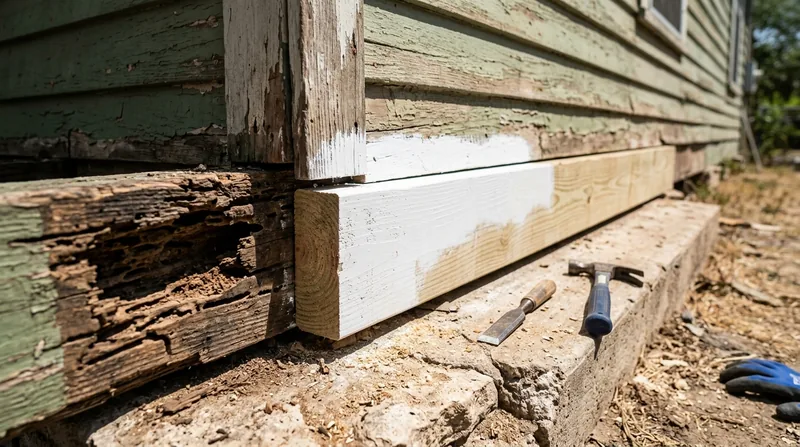




Austin's hot, humid summers and occasional flash-flood moisture create real conditions for wood rot in the city's historic craftsman bungalows, Hill Country-style limestone homes, and mid-century modern residences. Whether it's a decayed sill plate on a Victorian cottage in Clarksville, a rotted rim joist on a shotgun cottage in East Austin, or water-damaged fascia and soffit on a newer stucco home in the outer suburbs, wood rot and dry rot repair is a permanent structural solution, not a cosmetic patch. We cut out decayed framing, siding, and trim, treat surrounding wood to stop the spread, and rebuild with rot-resistant lumber. The result is a repair that lasts, backed by the same carpenters who did the work.
Why Wood Rot and Dry Rot Repair Matters in Austin's Humid Climate
Austin sits at the edge of the Hill Country where limestone bedrock, creek-cut ravines, and Flash Flood Alley drainage patterns put real moisture stress on ground-level framing and exterior wood. Combined with the city's hot humid subtropical climate, which runs termite pressure most of the year, wood rot becomes a slow but serious threat to any home's structural integrity. Left untreated, decayed joists, sill plates, and framing members lose load-bearing capacity, creating settlement and safety risk over time. The cost of repair grows the longer the decay spreads.
- We identify rot at the source, not just the visible symptom, by probing framing and siding to find soft or discolored wood.
- We remove all decayed material and treat adjacent wood with a preservative to halt spread to healthy lumber.
- We rebuild with pressure-treated or naturally rot-resistant species chosen for the specific exposure and load.
- We document the repair for your insurance company if the damage stems from a covered loss.
This approach stops the decay at its source and restores the structural member to full capacity, a permanent fix that protects your home for decades.
Key info: Austin's city building department requires permits for structural repairs involving floor joists, rim joists, sill plates, and load-bearing framing. Check with the City of Austin Development Services for permit thresholds and requirements specific to your repair scope. We work with your permit process and can help document the damage for your insurance claim.
For more detail on related structural issues, see our page on floor joist and subfloor repair.
How We Repair Wood Rot and Dry Rot: Our Process in Austin Homes
Every wood rot repair starts with a careful inspection to understand the extent of decay, the cause of moisture, and the structural consequence. We don't guess at size or scope. We probe the wood, identify the boundary between sound and decayed material, and plan a repair that addresses both the damage and the moisture source that allowed it. Our carpenters then remove the decayed section, treat the surrounding wood, and rebuild with the right material for the job.
- We inspect and probe the affected area to identify all decay and establish the sound wood boundary.
- We remove decayed material with hand tools and saws, taking care to preserve sound framing whenever possible.
- We treat the exposed wood with a wood preservative to kill fungal growth and protect adjacent material.
- We cut and fit new lumber, using pressure-treated or rot-resistant species matched to the original member size and species.
- We secure new wood with fasteners and framing connections appropriate to the load and location.
- We restore siding, trim, or fascia to match the existing profile and finish.
A typical example: a Hyde Park craftsman bungalow with a rotted sill plate on the north-facing foundation wall, caused by poor gutter drainage. We remove the decayed section, treat the rim joist above, and rebuild with pressure-treated lumber sistered to the existing framing, restoring the bearing capacity and stopping further decay.
Example: A shotgun cottage in East Austin shows soft wood in the exterior trim and fascia where a downspout discharge pooled against the wall. We cut out the decayed fascia and soffit, treat the underlying rafter tails, and install new redwood trim with proper drainage slope. The repair takes 2 to 3 days depending on access and the extent of hidden decay once we open the wall.
For more on structural framing repairs, visit our framing and structural carpentry page.
Wood Rot and Dry Rot Repair Methods: Repair vs. Replacement
| Approach | Description | Best for |
|---|---|---|
| Localized decay removal and sistering | We cut out the decayed section and attach new lumber alongside the existing member using bolts or lag screws to share the load. | Rim joists, floor joists, and sill plates where decay affects less than half the member depth and the beam or joist can still carry load with reinforcement. |
| Full member replacement | We remove the entire decayed joist, beam, or stud and install a new member of matching or greater capacity, supported during installation. | Load-bearing beams, floor joists, or studs where decay is extensive, where sistering is not structurally adequate, or where the member is undersized. |
| Exterior trim and fascia repair | We remove decayed fascia, soffit, or trim boards, treat the underlying rafter or framing, and install new trim in rot-resistant lumber or composite material. | Fascia, soffit, siding, and exterior trim where decay is cosmetic and structural members are sound, or where water intrusion is the primary cause. |
| Moisture source elimination and preventive treatment | We repair gutters, downspouts, grading, or drainage to stop water from reaching the wood, then treat exposed wood with a preservative. | Homes where wood rot is recurring or where decay is caught early and the structural member is still sound but at risk. |
The choice between repair and replacement depends on the extent of decay, the structural role of the member, and the cost-benefit of each approach. We propose repair whenever the wood justifies it. When replacement is the honest answer, we say so and explain why.
Wood Rot and Dry Rot Repair Cost in Austin: What to Expect
Wood rot repair costs in Austin start at from $650 for a localized repair on exterior trim or a small section of rim joist. Most residential wood rot jobs range from $800 to $2,500 depending on the extent of decay, the structural member involved, and the complexity of access. A full floor joist replacement or extensive sill plate repair on a historic home can run $3,000 to $6,000 or more. The primary factors that move cost are the size and depth of the decayed area, whether the repair requires temporary support or bracing, the species and grade of replacement lumber, and the difficulty of accessing the damage.
Getting 2 to 3 estimates is smart because decay extent is often hidden until we open the wall or probe deeper. An estimate includes a site visit, a detailed assessment of the decay, and a clear breakdown of labor and materials. We respond within 24 hours at (737) 387-5120 with a free, no-obligation estimate. For a full pricing overview and examples of typical jobs, visit our pricing page.
If the repair stems from a covered loss (storm damage, burst pipe, or other insurable event), we can help you document the damage for your insurance claim. Insurance does not cover maintenance-related rot, but it often covers water intrusion from a sudden event. We recommend getting your claim adjuster on site early so the insurer understands the scope.
Wood Rot and Dry Rot Repair Near Me: What to Look for When Hiring a Carpentry Contractor
Finding the right carpenter for wood rot repair in Austin means checking three things: that the contractor is fully insured and willing to provide proof of coverage, that they give you a detailed written estimate before starting work, and that they can explain the repair approach and why they chose it. Ask for references from recent wood rot or structural repairs, not just a list of names. Contact those homeowners and ask about the quality of the work, whether the repair held up, and whether the contractor explained the process clearly.
If your repair involves structural framing or a load-bearing wall, check whether a permit is required with the City of Austin Development Services. Your contractor should help you understand permit requirements and work with the building inspector. For historic homes in Austin's designated districts (Hyde Park, Travis Heights, East Austin), verify whether the repair requires approval from the Historic Landmark Commission. Some HOAs in Cedar Park, Lakeway, or West Lake Hills also require approval for exterior work. We handle these requirements as part of the job and can guide you through the process.
Get estimates in writing, ask about warranty or guarantee on the repair, and verify that the contractor carries liability insurance and worker's compensation. A reputable shop will have been in business long enough to stand behind the work and will not pressure you to decide on the spot. Call us at (737) 387-5120 to discuss your repair and get a free estimate, or visit our contact page to request an inspection.
Wood Rot & Dry Rot Repair in Austin: Pricing Guide
| Service | Price | Details |
|---|---|---|
| Exterior trim and fascia repair | Starting at $650 | Decayed fascia, soffit, or trim boards; includes removal, treatment of underlying framing, and new trim installation |
| Localized joist or sill plate repair | Starting at $1,200 | Partial decay on rim joist, floor joist, or sill plate; includes sistering or localized replacement and preservative treatment |
| Full beam or joist replacement | Starting at $2,500 | Complete removal and replacement of decayed structural member; includes temporary support, new lumber installation, and finishing |
| Large or multi-area repairs | On estimate | Extensive decay across multiple framing members or structural complexity requiring temporary bracing or engineered solutions |
| Travel and site visit | Included | No separate charge for travel within Austin and surrounding service areas; all estimates are free and no-obligation |
Indicative pricing, the exact cost depends on square footage, finish, and site access. Free personalized estimate within 24h at (737) 387-5120.


