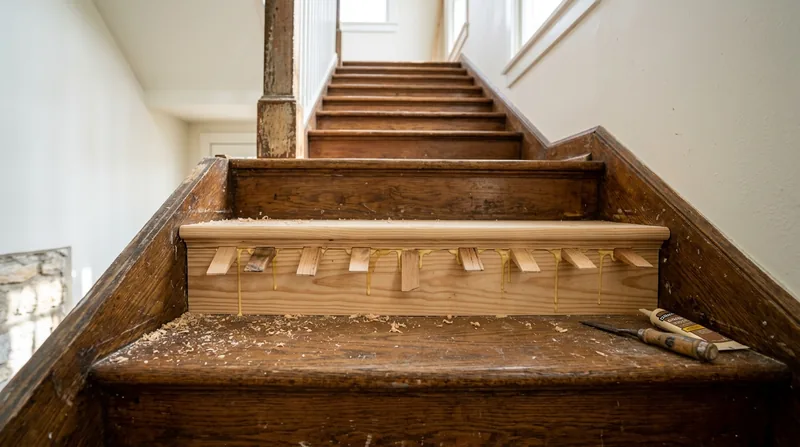




Austin's hillside neighborhoods, from Hyde Park to the western Hill Country suburbs, climb on staircases that take real punishment. The region's hot, humid subtropical climate accelerates wood degradation, while the terrain itself, cut by creeks and ravines, puts structural strain on every flight and railing. Whether you own a Craftsman bungalow in Travis Heights, a mid-century modern in Allandale, or a limestone-fronted home in Bee Cave, Stair & Railing Repair in Austin is not a cosmetic job. Squeaky treads, loose balusters, and worn stringers compromise safety and signal deeper issues in the stair structure. We repair and rebuild staircases, restore period railings, and install code-compliant handrails and attic ladders for homeowners across Austin and the surrounding areas. Our work starts with a clear diagnosis, not a sales pitch about replacement.
Why Stair & Railing Repair Matters in Austin's Homes
Austin's residential stock spans a century of building styles, and nearly every one includes stairs that carry daily traffic. The combination of Central Texas humidity, seasonal temperature swings, and the region's termite pressure creates conditions that warp, soften, and weaken wood treads, stringers, and railings faster than homeowners often realize. A stair that feels loose or sounds hollow is not just annoying. It signals that fasteners are failing, wood fibers are separating, or structural members are losing integrity. Addressing these problems early keeps the repair focused and affordable. Ignoring them leads to larger damage and genuine safety risk.
- We identify the root cause, whether loose fasteners, wood rot, dry rot from moisture intrusion, or termite damage documented by your pest inspection.
- We repair treads and risers by re-fastening, scribing new wood, or replacing individual components rather than whole staircases when the structure justifies it.
- We rebuild stringers, the angled boards that support treads and risers, using sistered reinforcement or selective replacement to restore load capacity.
- We restore period railings in historic neighborhoods like Clarksville and East Austin, matching original baluster profiles and newel post details.
- We install modern code-compliant handrails and attic ladders that meet current safety standards without compromising the home's character.
Staircases are load-bearing structures, and repairs that alter their geometry or load path may require a permit from the City of Austin Building Services Department. We help you understand when a permit applies and what documentation to gather.
Key info: Austin's humid subtropical climate accelerates wood decay in interior stairs, especially in basements or areas with poor ventilation. Termite damage to stringers and treads is common in the region and should be documented by a licensed pest inspection before repair work begins. See the City of Austin Building Services for permit requirements on structural stair alterations.
How We Repair and Rebuild Staircases in Austin
Every stair repair starts with a hands-on assessment. We walk the stairs, test treads for flex and movement, examine fasteners, and probe wood for soft spots that signal rot or termite activity. We photograph problem areas and explain what we find in plain language. If the stringer is sound and only fasteners have failed, we re-secure the stair. If wood is damaged but the stair structure is repairable, we sister reinforcement or replace the affected section. Only when replacement is the honest answer do we recommend it. This approach keeps costs down and preserves the home's original character whenever possible.
- We inspect the stair structure, fasteners, and wood condition, documenting any visible rot, pest damage, or movement.
- We discuss findings with you and propose a repair plan that addresses the safety issue and the underlying cause.
- We obtain any required permits from the City of Austin if the repair alters the stair's load path or geometry.
- We remove loose or damaged treads, risers, and fasteners, and prepare the stringer for repair or reinforcement.
- We install new fasteners, sister reinforcement, or replacement wood using materials that match the original species and finish.
- We test the repaired stair for movement and squeaking, and adjust fasteners until the stair is solid and quiet.
- We restore the finish, whether stain, paint, or natural wood, to match the surrounding surfaces.
Example: A 1950s ranch home in Crestview had squeaky stairs and a loose railing. We found the stringer fasteners had corroded and the bolts connecting the baluster posts to the rim joist had sheared. We replaced the fasteners with stainless-steel hardware, re-secured the balusters, and tightened all connections. The stair was solid and safe again, and the owner avoided a $4,500 replacement. See our work on Framing & Structural Carpentry for more on how we approach load-bearing repairs.
| Repair Approach | Description | Best For |
|---|---|---|
| Re-fastening | Remove loose fasteners, replace with stainless-steel or galvanized bolts, and tighten all connections. | Squeaky treads and loose railings caused by corroded or loose hardware. |
| Sistered Reinforcement | Attach a new stringer member alongside a weakened stringer to restore load capacity without full replacement. | Stringers with minor wood damage, soft spots, or slight movement but sound overall geometry. |
| Selective Replacement | Remove and replace individual treads, risers, or damaged stringer sections, matching original wood species and finish. | Localized rot, termite damage, or worn treads where the overall stair structure is sound. |
| Full Stringer Replacement | Remove and rebuild one or both stringers with new material, preserving treads and railings where possible. | Extensive rot, termite damage, or structural failure that repair or sistering cannot safely address. |
| Railing Restoration | Repair or replace balusters, newel posts, and handrails, matching period details in historic homes or installing code-compliant modern rails. | Loose, rotted, or missing balusters; period railings in Craftsman or Victorian homes; or modern safety upgrades. |
Stair & Railing Repair Cost in Austin: What to Expect
Stair and railing repair costs in Austin start at around $600 for straightforward fastener replacement and re-securing a loose flight. From there, the price depends on how much damage we find and what the repair requires. A stringer with localized rot that needs sistering or partial replacement typically runs $1,200 to $2,500. Full stringer replacement or extensive railing work can reach $3,500 to $5,000 or more. The factors that move the price are the number of stringers involved, the extent of wood damage, whether the repair needs a permit, and whether we're matching period details in a historic home. Travel to Round Rock, Cedar Park, Leander, or other areas in our service zone is included. We always give you a free estimate within 24 hours so you know what the job will cost before we start.
Getting two or three estimates is smart. It gives you a sense of the market and helps you spot differences in approach. Some contractors will recommend full replacement immediately. We explain what repair can do and only recommend replacement when the structure or damage pattern genuinely calls for it. See our full pricing overview for more detail on how stair size, access, and complexity affect the estimate.
Stair & Railing Repair Near Me: What Austin Homeowners Should Know When Hiring a Contractor
Finding a carpenter you trust to work on your home's staircases requires more than a quick online search. Stairs are safety-critical structures, and the person doing the work should understand wood behavior, fastening standards, and local permit requirements. Start by asking whether the contractor is fully insured and can provide proof of coverage. Ask for references from past stair repair work, and actually call them. A good contractor will have no problem connecting you with homeowners who had similar jobs done. If your home is in a historic district like Hyde Park or Clarksville, ask whether the contractor has experience matching period details and working with heritage preservation guidelines. If the repair involves altering the stair geometry or load path, confirm that the contractor understands when a permit is required and will help you navigate the City of Austin Building Services Department. Finally, get a written estimate that itemizes the work, materials, and timeline. The estimate should explain what's causing the problem and why the proposed repair addresses it.
- Verify that the contractor carries liability and workers' compensation insurance and can show you a current certificate.
- Ask for at least two references from stair or railing repair work completed in the past two years.
- Confirm that the contractor understands permit requirements for structural stair alterations in your jurisdiction.
- Request a written estimate that breaks down labor, materials, and timeline, and explains the root cause of the problem.
- Check whether the contractor has experience with period homes if your house is a Craftsman bungalow, Victorian cottage, or other heritage property.
- Ask how the contractor handles unexpected damage discovered during the repair, and whether the estimate price covers minor variations.
Ready to get started? Contact us for a free estimate at (737) 387-5120. We respond within 24 hours and never pressure you to book before you're ready.
Stair & Railing Repair in Austin: Pricing Guide
| Service | Price | Details |
|---|---|---|
| Fastener replacement and re-securing | Starting at $600 | Loose treads, squeaky stairs, and corroded bolts replaced with stainless-steel hardware and re-tightened connections |
| Sistered reinforcement or partial stringer repair | Starting at $1,200 | Localized wood damage or soft spots in stringers addressed by reinforcement or selective replacement of affected sections |
| Full stringer replacement or extensive railing work | Starting at $3,500 | Complete stringer removal and rebuild, extensive rot or termite damage repair, or period railing restoration in historic homes |
| Complex or multi-story stair projects | On estimate | Large homes, multiple flights, load-bearing alterations, or historic preservation work requiring on-site assessment and design consultation |
| Travel within service area | Included | No separate mileage fee for Austin, Round Rock, Cedar Park, Pflugerville, Leander, and surrounding communities |
| Free estimate | No charge | Response within 24 hours at (737) 387-5120, no obligation to book, written estimate breaks down labor and materials |
Indicative pricing, the exact cost depends on square footage, finish, and site access. Free personalized estimate within 24h at (737) 387-5120.


