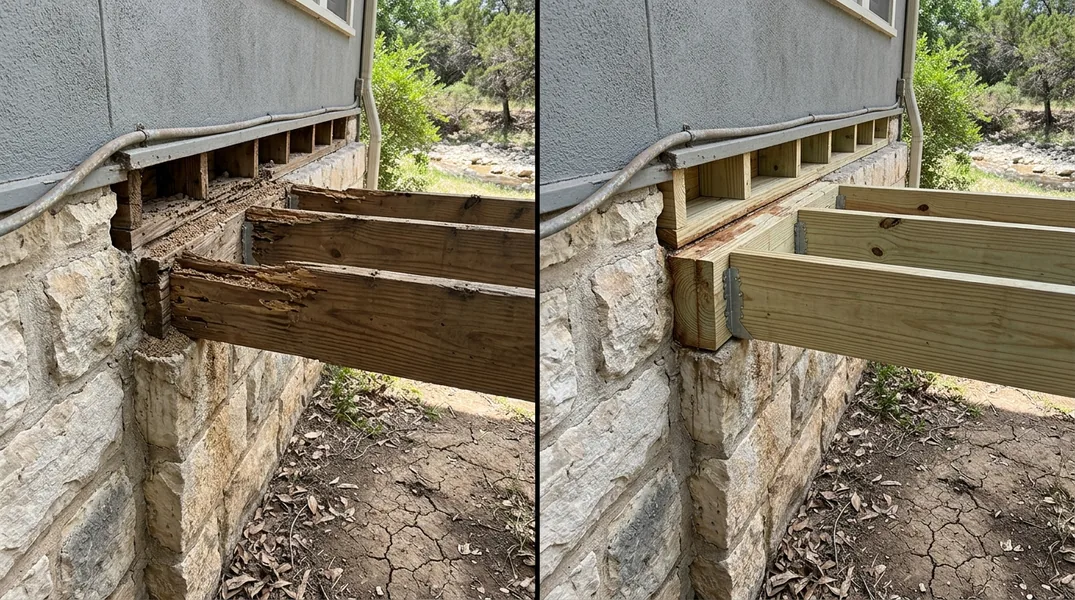
Why Austin's Climate Makes Homes Vulnerable to Termites and Wood Rot
Austin homeowners face a unique challenge when it comes to protecting their properties from wood-destroying pests and decay. The combination of warm temperatures, high humidity, and seasonal moisture creates an ideal breeding ground for both termites and the fungal conditions that lead to wood rot. Unlike drier climates where wood damage progresses slowly, the Central Texas environment accelerates deterioration significantly.
Termites thrive in temperatures above 60 degrees Fahrenheit, which means Austin provides them with a year-round feeding opportunity. The region's humidity levels, especially during spring and fall, create moisture pockets in walls, crawl spaces, and foundations where termites establish colonies. Wood rot fungi similarly require moisture and warmth to spread, making the transition seasons particularly dangerous. Many homeowners don't realize that a single wet spring can set the stage for structural damage that takes years to become visible, by which time the cost of repairs has multiplied significantly.
Signs of Termite Damage: What Every Austin Homeowner Should Know
Recognizing the signs of termite damage early can mean the difference between a minor repair and a major structural overhaul. Subterranean termites, the most common species in Texas, work from the inside out, which means damage is often hidden until it becomes severe. The first warning sign is often the appearance of mud tubes along foundation walls or wooden beams. These tubes, about the width of a pencil, are highways that termites build to protect themselves from light and dry air as they travel between their underground colonies and food sources above ground.
Other critical indicators include soft or hollow-sounding wood, especially in floor joists and support beams, buckling or warped flooring, and small holes in wood surfaces with a fine sawdust-like residue called frass. You might also notice cracked or bubbling paint on wood surfaces, which suggests moisture accumulation and termite activity beneath. Swarmers, which are winged termites that appear in spring, are another red flag. If you spot these insects near your home's foundation or inside your home, a mature colony is likely already established. The key is to act immediately, as termites consume wood at a rate of about one pound per year per colony, and large colonies can cause structural failure if left untreated.
Wood Rot & Dry Rot Repair Near Me: When to Call a Professional
Wood Rot & Dry Rot Repair is a service that requires professional assessment because homeowners often underestimate the extent of decay. Dry rot, despite its name, is actually caused by a fungus that thrives in damp conditions and can spread rapidly through wood, compromising structural integrity in ways that aren't immediately obvious. Unlike termite damage, which creates visible tunnels and mud tubes, dry rot can hide deep within wood members, weakening them from the inside while the surface appears intact.
You should call a professional carpenter if you notice any soft, crumbly wood; a musty smell in basements, crawl spaces, or attics; or visible fungal growth that appears as white threads or fruiting bodies. Additionally, if you've experienced water intrusion from roof leaks, foundation cracks, or plumbing issues, a professional inspection is essential even if you don't see obvious damage yet. Austin Carpentry can conduct a thorough evaluation and determine whether wood needs to be treated, reinforced, or replaced entirely. Early intervention prevents the spread of decay and protects the structural integrity of your entire home.
Termite Damage Repair Cost in Austin: What to Budget
Understanding termite repair cost requires knowing that pricing depends on several factors: the extent of damage, the location of affected wood, and whether structural members like beams or floor joists need replacement. A minor repair involving surface-level damage and localized treatment might cost between $500 and $2,000, while moderate damage affecting multiple areas could range from $2,000 to $8,000. Severe structural damage requiring Floor Joist & Subfloor Repair or Beam Replacement & Load-Bearing Wall Removal can exceed $10,000 or more.
The good news is that catching damage early dramatically reduces costs. A homeowner who addresses termite activity within the first year of infestation typically spends a fraction of what someone pays when damage goes undetected for five or ten years. Additionally, preventive pest control treatments, which cost $300 to $1,000 annually depending on your home's size and risk factors, are far less expensive than repairs. To get an accurate estimate for your specific situation, Austin Carpentry offers a free estimate that includes a detailed assessment of damage and a transparent breakdown of pricing. Call (737) 387-5120 to schedule your inspection today.
Prevention Strategies for Austin Homeowners
Preventing termite and wood rot damage is significantly more cost-effective than repairing it. Start by eliminating moisture sources around your home's foundation. Ensure gutters and downspouts direct water at least four to six feet away from the house, grade soil away from the foundation, and maintain proper ventilation in crawl spaces and attics. Reduce wood-to-soil contact by keeping mulch, firewood, and wooden fence posts away from your home's exterior. If you have a deck or porch, use pressure-treated lumber and ensure adequate airflow underneath to prevent moisture accumulation.
Inspect your home regularly, at least twice yearly, paying special attention to basements, crawl spaces, and attics where termites and moisture problems often begin. Look for the warning signs mentioned earlier, and don't ignore small issues hoping they'll resolve on their own. Professional pest inspections every one to two years are a worthwhile investment for homes in Austin, where termite pressure is consistently high. Chemical barriers applied by licensed pest control professionals provide excellent protection, and many companies offer warranties on their work. Combining preventive pest control with moisture management creates a comprehensive defense against wood-destroying organisms.
Next Steps: Getting Professional Help
If you suspect termite damage or wood rot in your home, the time to act is now. Waiting allows damage to spread and costs to multiply. Austin Carpentry specializes in comprehensive assessment and repair of both termite and wood rot damage, with expertise in everything from minor wood replacement to major structural work. Our team understands the specific challenges that Central Texas homes face and brings practical, proven solutions to every project.
Don't let uncertainty about the extent of damage or repair costs prevent you from taking action. Contact Austin Carpentry at (737) 387-5120 or request a free estimate through our website. We'll conduct a thorough inspection, explain what we find in clear terms, and provide you with honest, competitive pricing for the repairs your home needs. Your home's structural integrity and your family's safety depend on addressing wood damage promptly. Let the professionals at Austin Carpentry help you protect your investment.
Looking for a professional carpentry contractor in Austin? Austin Carpentry responds fast for all your carpentry needs.
Get a Free QuoteOur services: Wood Rot & Dry Rot Repair · Termite Damage Repair · Floor Joist & Subfloor Repair