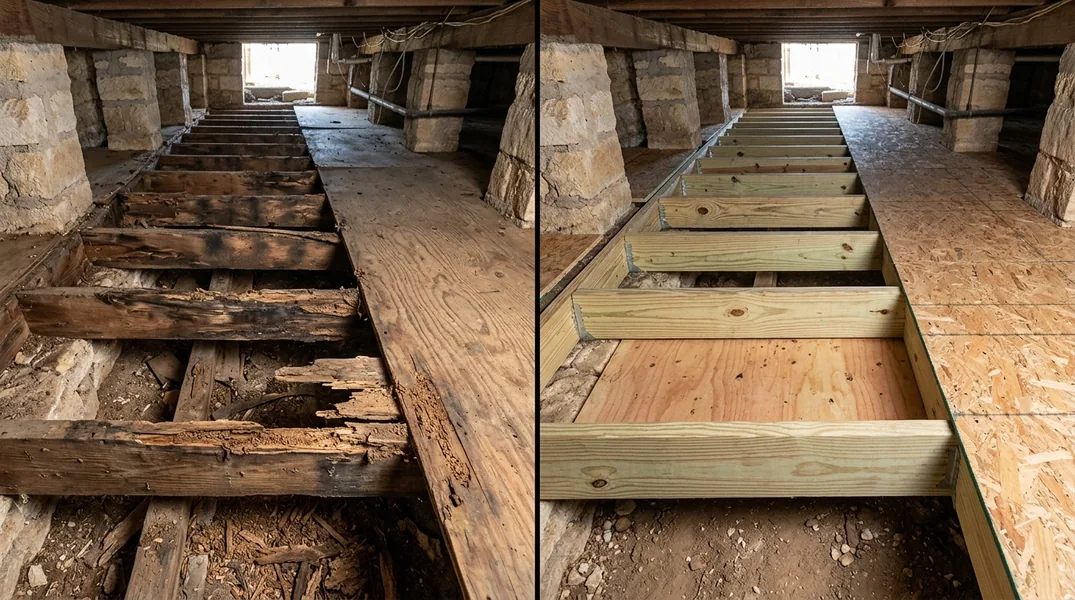
Why Is My Floor Sagging? Common Causes in Older Austin Homes
If you've noticed your hardwood floors dipping or sloping in certain rooms of your Austin home, you're not alone. Sagging floors are one of the most common structural issues we see in older properties across Central Texas. The problem rarely appears overnight, and understanding what's causing it is the first step toward fixing it properly.
The primary culprit behind sagging floors is deterioration of the floor joists, the wooden beams that support your floor structure from underneath. Floor joists can weaken for several reasons. Wood Rot & Dry Rot Repair is one of the most common causes, especially in homes with moisture problems, poor crawl space ventilation, or previous water damage. When wood rots, it loses its structural integrity and can no longer adequately support the weight of your flooring, furniture, and household members. Termite Damage Repair is another serious concern in the Austin area, as termites tunnel through wood and create hollow sections that compromise structural strength. Additionally, undersized joists, settling foundations, or the natural degradation of wood over decades can all contribute to sagging floors in homes built before modern building codes were established.
Understanding Floor Joist Repair and Sistering Techniques
When a floor joist has been damaged by rot, insects, or age-related wear, repair options depend on the extent of the damage and the overall structural situation. Floor Joist & Subfloor Repair is a specialized service that requires a careful assessment of which joists need attention and what repair method will be most effective and cost-efficient.
One of the most common and effective repair techniques is called sistering floor joists. This method involves installing a new wooden beam (called a sister joist) directly against the damaged or weakened original joist, then fastening them together securely. The sister joist shares the load-bearing responsibility with the original joist, effectively doubling the support capacity in that section. This approach works well when the damage is localized to one or two joists and the rest of the floor structure is sound. The sister joist is typically cut to the same dimensions as the original and secured with bolts, nails, or modern framing connectors spaced at regular intervals along its length.
In cases where rot or damage is more extensive, or where multiple joists are compromised, a full joist replacement may be necessary. This is more invasive and costly than sistering, as it requires temporarily supporting the floor above while the damaged joist is completely removed and replaced with new lumber. However, full replacement is sometimes the only way to ensure long-term structural integrity, particularly in load-bearing areas or where the damage has weakened the joist beyond what sistering can safely address.
Sagging Floor Repair Cost in Austin: What to Budget
The pricing for sagging floor repair varies significantly depending on the scope of work, the number of joists affected, and the underlying cause. For homeowners in Austin, a simple sistering repair on one or two joists might range from $1,500 to $4,000, while more extensive repairs involving multiple joists or full replacements can easily exceed $10,000 or more. The challenge is that you can't know the true cost until a professional has inspected the crawl space or basement and determined exactly which joists need work.
Several factors influence the final bill. First is access: if your crawl space is tight, damp, or difficult to navigate, the labor time increases. Second is the underlying cause. If wood rot is present, the affected area may need to be treated or replaced with pressure-treated lumber, adding expense. Third is whether temporary support beams need to be installed during the repair process. Fourth is whether the subfloor itself needs attention alongside the joists. Finally, if the root cause was moisture or drainage problems, addressing those issues prevents future damage but adds to the initial investment. Many homeowners find that tackling the repair sooner rather than later saves money, because further deterioration can expand the damage and make repairs more complex and costly.
Identifying When Professional Help Is Necessary
Not every sloping floor is an emergency, but it's always a sign that something needs attention. A floor that feels bouncy or spongy underfoot, or that slopes noticeably from one room to another, indicates that the structural support system is compromised. If you notice cracks in drywall, doors that stick or won't close properly, or visible gaps between the floor and baseboards, these are additional clues that floor settlement or joist failure is occurring.
The best approach is to have a professional inspection. Austin Carpentry can assess your floor and identify the root cause, which might be wood rot, termite damage, inadequate support, or moisture issues. A thorough inspection involves looking at the joists, checking for signs of rot or insect damage, evaluating the crawl space or basement conditions, and determining whether the problem is localized or widespread. Once you understand the problem, you can make an informed decision about repairs. Some issues are urgent and need immediate attention to prevent injury or further structural damage. Others can be planned and scheduled at your convenience. Either way, knowing the facts allows you to act with confidence.
Preventing Future Sagging: Moisture Control and Maintenance
Once your floor has been repaired, protecting it from future damage is essential. The most common cause of floor joist problems is moisture. Crawl spaces that are damp, poorly ventilated, or exposed to standing water create ideal conditions for wood rot and termite activity. Ensuring that your crawl space has proper ventilation, that gutters and downspouts direct water away from the foundation, and that any water intrusion is addressed quickly will go a long way toward preserving your repair investment.
Regular inspections of your crawl space or basement are also valuable. Look for signs of moisture, soft spots in wood, or evidence of pest activity. If you see any of these warning signs, contact a professional promptly. Addressing small problems early prevents them from becoming major structural repairs. Additionally, if your home has experienced significant water damage from flooding or plumbing leaks, have the affected wood inspected even if it appears dry. Sometimes damage takes time to manifest, and early detection can make a huge difference.
If your home is showing signs of a sagging floor or you suspect joist damage, don't wait. Contact Austin Carpentry today at (737) 387-5120 or request a free estimate so we can assess your situation and recommend the best repair approach for your home.
Why Choose Austin Carpentry for Your Floor Repair
Floor joist and structural repairs are not DIY projects. They require specialized knowledge, proper equipment, and experience working with load-bearing systems. Austin Carpentry has been serving homeowners throughout Austin with professional carpentry and structural repair services for years. We understand the unique challenges that older homes in Central Texas face, from the clay soil that can shift and cause foundation settlement to the humid climate that promotes wood decay.
When you work with us, you get a thorough inspection, an honest assessment of your repair options, and quality workmanship that meets or exceeds building code standards. We handle everything from Floor Joist & Subfloor Repair to Beam Replacement & Load-Bearing Wall Removal, so no matter the scope of your structural issue, we have the expertise to help. We're committed to getting your home back to solid, level floors and peace of mind. Call us at (737) 387-5120 or visit our website to schedule your inspection today.
Looking for a professional carpentry contractor in Austin? Austin Carpentry responds fast for all your carpentry needs.
Get a Free QuoteOur services: Wood Rot & Dry Rot Repair · Termite Damage Repair · Floor Joist & Subfloor Repair