Carpenter in Austin, TX: Wood Rot, Structure & Finish Work
Austin Carpentry is a local residential carpentry shop serving homeowners throughout Austin and the surrounding areas, including Round Rock, Cedar Park, and Pflugerville. We work on the full range of residential wood carpentry: structural repair of rot and insect damage, floor joist and beam work, load-bearing alterations, and the finish carpentry that brings a home together. The building stock here is diverse, Craftsman bungalows and Victorian cottages in Hyde Park, limestone and native-stone homes across the Hill Country neighborhoods, mid-century modern homes in Allandale, historic shotgun cottages in East Austin, and newer subdivisions on the outer ring. What ties them together is age, settling, and the real moisture and termite pressure that comes with Austin's hot, humid subtropical climate and creek-cut terrain.
When homeowners search for a carpenter near me in Austin, they're often dealing with wood that has failed: dry rot discovered in siding or a deck frame, termite damage found after a pest inspection, or a floor that has gone soft and bouncy. We diagnose the pathology, explain what happened and why, and propose repair or replacement based on what the wood actually justifies. Call us at (737) 387-5120 or request a free wood rot inspection to get started.
Why Wood Fails in Austin, and How We Read It
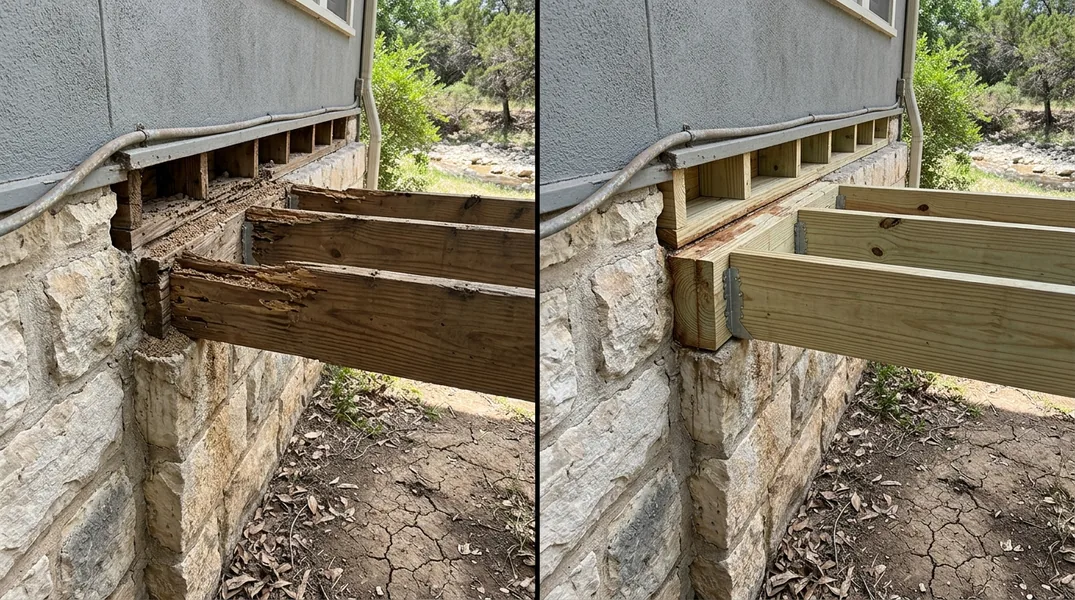
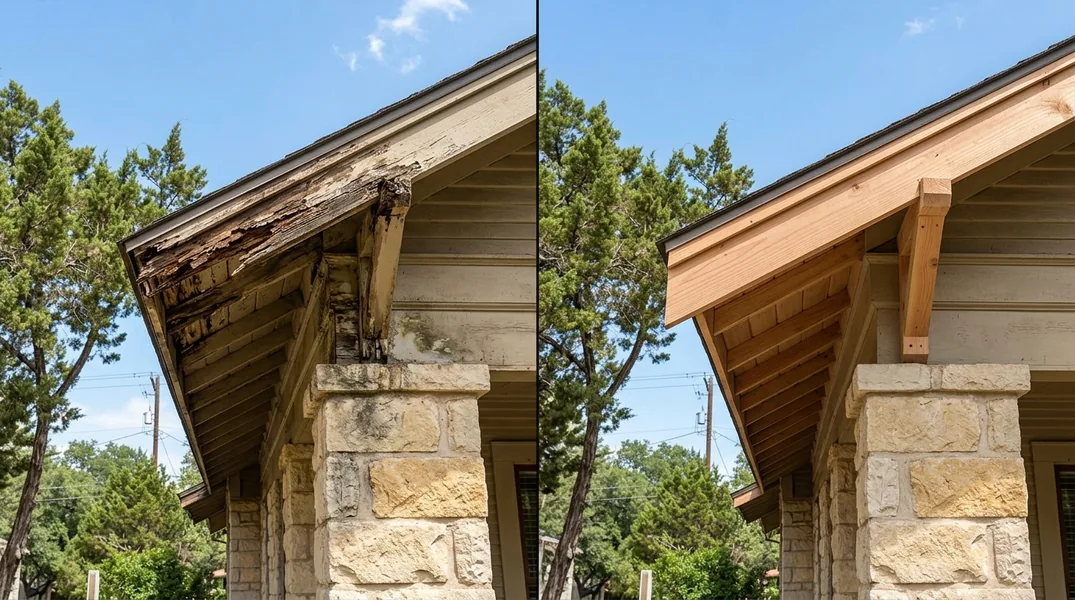
Wood fails in Austin for specific reasons tied to this climate and landscape. Dry rot is not the result of standing water but of sustained moisture in the wood, the kind that builds up over months in a sill plate under a leaking gutter, a window sill where caulk has failed, or a deck ledger board where water runs down from above and sits against the rim joist. The fungus that causes dry rot needs that steady dampness to colonize the wood and break down its structure from within. Termites and wood-boring beetles work the same way: they hollow out the interior of a joist or beam while the painted surface still looks sound. The damage is often invisible until a probe finds soft wood where there should be solid fiber. What all three have in common is that they start with a water path, a leak, poor drainage, or contact with soil, and they keep going as long as that path stays open.
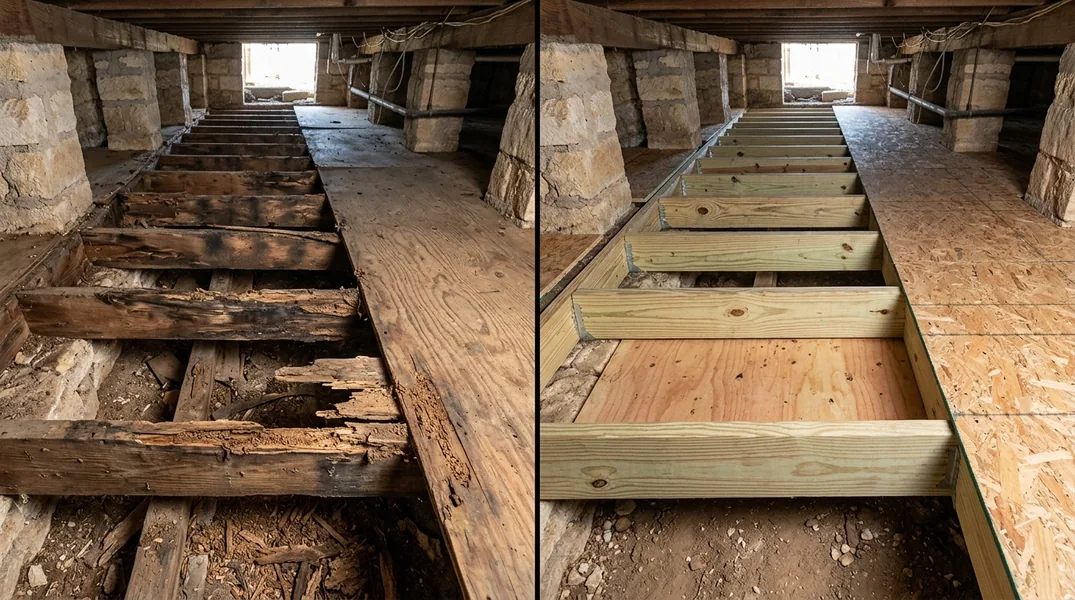
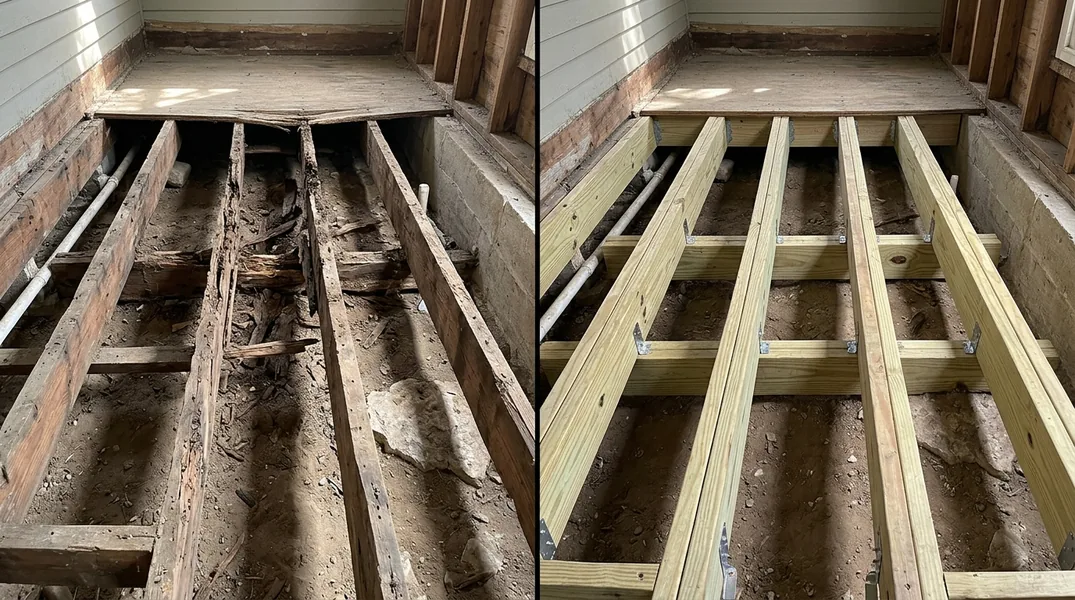
When we assess rot or insect damage, we are looking for three things: where the sound wood begins, whether the damaged section is cosmetic or structural, and what fed the problem in the first place. We probe the framing behind the visible surface, check the ledgers and sills where water collects, and trace the moisture source. If the decay is only surface-deep and the member is still sound, we can cut out the bad wood and rebuild it with new material. If a joist or beam has lost too much of its cross-section, it gets replaced. The critical point is this: if the water source is not closed, the repair fails again. Filling rot with epoxy or caulk is not a repair; it is a cosmetic cover that masks the problem.
On termite and beetle damage, we work from your own pest inspection report. We repair and replace the wood that has been damaged. We do not perform termite treatment, fumigation, extermination, or any form of pest control, that is a separate regulated trade, and it is not our work. Our role is to restore the structural integrity of the wood after the damage has been identified. If you have questions about your specific situation, call (737) 387-5120 or learn more about termite damage repair.
Structural Carpentry in Austin: Joists, Beams and Settling
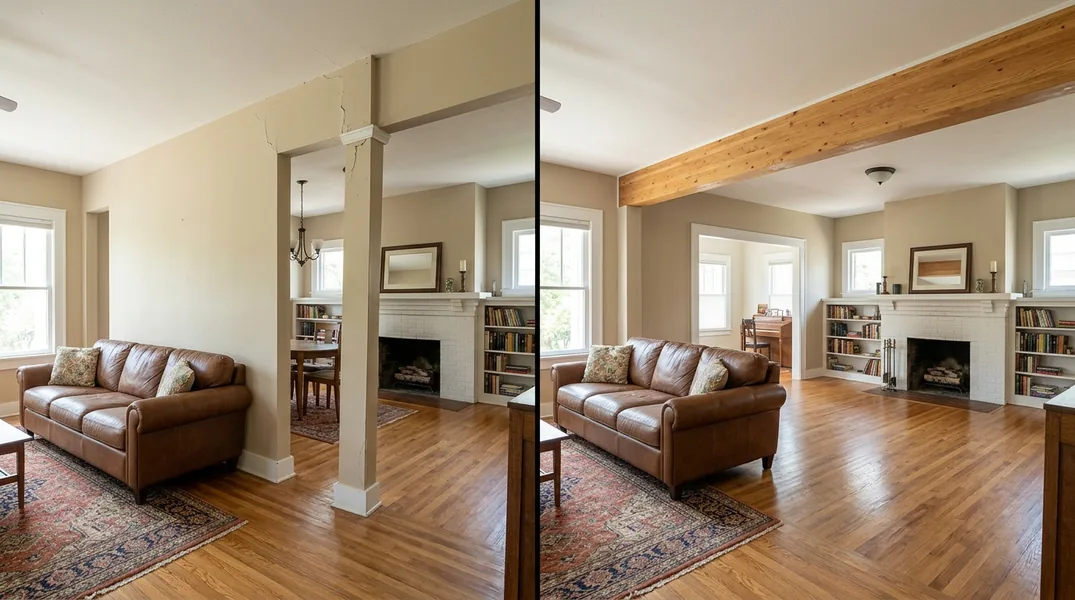
Austin's older homes have settled, sometimes visibly. A floor that slopes or a door that sticks is usually the result of a century of slow settling, which is the normal condition in this building stock. What matters is whether something is still moving and how the structural members are performing where they bear load. A floor joist that has cupped or twisted but is still sound can often be sistered, a new joist fastened alongside it to share the load. A subfloor section that has rotted out gets replaced. A sill plate that has failed at the foundation line can be rebuilt in sections. A beam that is undersized or damaged may need replacement with an engineered beam sized to carry the loads above it. Load-bearing wall removal for an open floor plan is common work, but it requires careful assessment of what the wall is carrying and where that load needs to go. Beam sizing and load-bearing alterations commonly require drawings from a licensed structural engineer and a permit from the local building department. We build to those engineered drawings; we do not produce them. Learn more about floor joist and subfloor repair, or explore beam replacement and load-bearing wall removal.
The key is honest assessment. If a joist is still sound and can be reinforced, that is cheaper and faster than replacement. If it has lost its structural capacity, replacement is the right answer. We quote both when both are real options, and we explain the difference in cost and timeline so you can make an informed decision.
Finish Carpentry and Built-Ins in Austin Homes
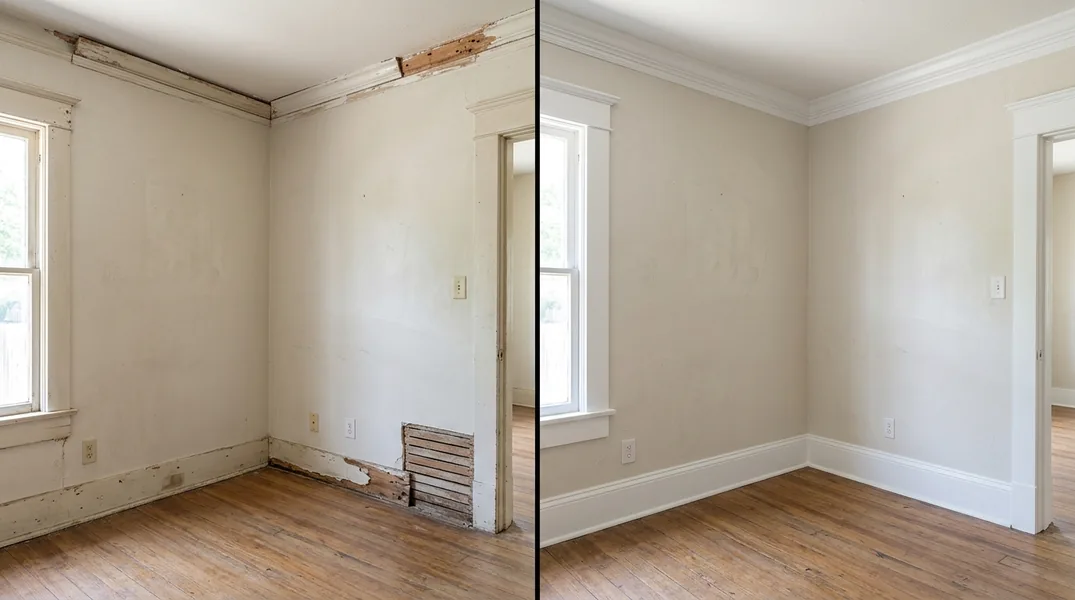
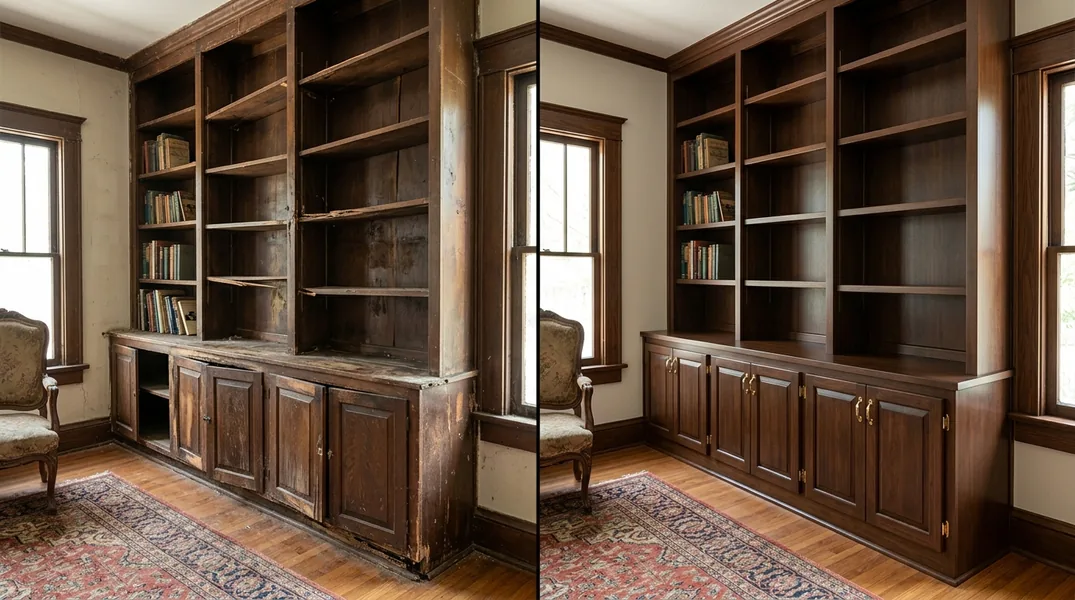
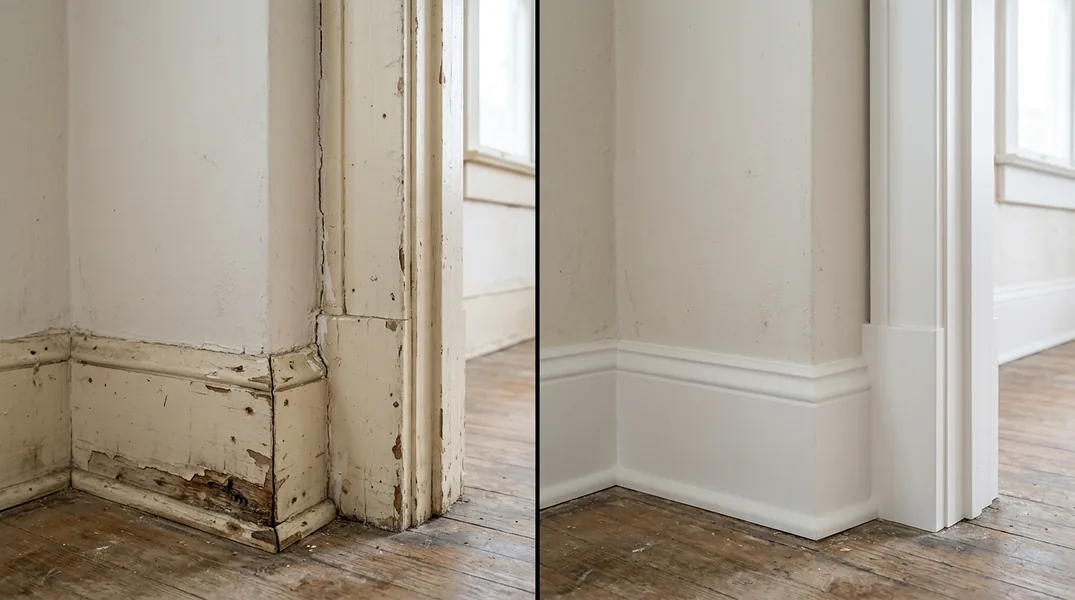
Finish carpentry is where a house becomes a home. This includes casing around doors and windows, baseboard trim, crown molding at the ceiling line, wainscoting on walls, custom built-ins and shelving, cabinet and vanity installation, interior and exterior doors, and stair and railing work. Austin's housing stock, especially the older homes in Hyde Park, Travis Heights, and Clarksville, often has original millwork worth preserving and matching. Bay windows, compact floor plans, and out-of-square openings are common, and they require scribing and careful layout rather than stock solutions. We build coped joints instead of caulked corners, match existing profiles to period trim, and maintain consistent reveals and proportions throughout the home. Finish carpentry and custom built-ins are craft work that makes the difference between a repair and a restoration.
Whether it is crown molding and baseboard installation, interior door installation, or cabinet and vanity work, the standard is the same: fit the home you have, not the home you wish you had.
Permits, Repair-or-Replace & What We Do Not Do
Permits are required for structural work in most jurisdictions, and requirements vary by location and scope. A permit is commonly required for removing or altering a load-bearing wall, replacing beams or floor joists, and making changes to stairs or exterior decks, but thresholds and procedures differ. We help you understand what your project involves and what the local building department is likely to ask for. We can also help document damage for an insurance claim if that applies to your situation. What we do not do is offer structural engineering services, produce engineered drawings, or make load calculations, those are the domain of a licensed structural engineer, and they are often required before a permit is issued for significant structural work.
On the question of repair versus replacement, the answer usually comes down to three factors: how much sound wood is left in the member, whether the water source or pest entry can be closed, and what the two approaches cost. We quote both when both are realistic options. We do not offer termite treatment, pest control, mold assessment, or mold remediation, those are separate trades with their own regulations. Requirements vary, always verify with the Austin building department before starting your project. When you are ready to move forward, contact us for a free estimate.